SUVs have traditionally been classified according to their size, price and positioning. Subcompact SUVs were associated with affordability and urban convenience, while larger models were expected to offer more space, powerful engines and premium equipment.
However, modern SUVs are challenging these distinctions. Features once reserved for expensive vehicles are increasingly available in smaller models, giving buyers more flexibility.
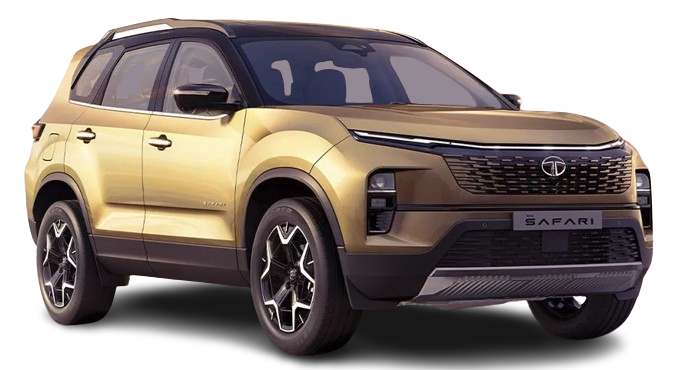
The Kia Sonet, Hyundai Creta and Tata Safari demonstrate how SUVs from different segments can share several technologies while continuing to serve distinct requirements.
Are Premium Features Still Limited to Larger SUVs?
Premium equipment is no longer exclusive to larger, more expensive vehicles.
The Kia Sonet, despite belonging to the subcompact SUV segment, offers ventilated front seats, a four-way powered driver's seat, a 10.25-inch touchscreen and a Bose seven-speaker audio system on applicable variants.
The Hyundai Creta offers ventilated front seats, eight-way powered front seats, dual-zone automatic climate control and a Bose eight-speaker sound system on selected variants.
Meanwhile, the Tata Safari provides features such as ventilated second-row captain seats in certain six-seater configurations, dual-zone climate control and a 36.9 cm cinematic infotainment screen on higher variants.
These examples show that premium features are increasingly available across SUV categories, although their combinations and availability differ.
Does Vehicle Size Still Determine Technology?
Technology is another area where traditional segment boundaries are becoming less distinct.
The Sonet offers Kia Connect with more than 70 connected features, including remote climate control, vehicle tracking and compatible voice commands.
The Hyundai Creta offers Hyundai Bluelink with more than 70 connected functions, including Home-to-Car connectivity via Alexa.
The Safari offers iRA 2.0 connected-car technology, featuring remote vehicle controls, live vehicle diagnostics and location-based services on applicable variants.
Although these systems differ in functionality, connected technology is no longer restricted to larger SUVs.
For buyers, the usefulness of these features may matter more than the vehicle's segment.
Are Safety Features Becoming More Accessible?
Safety technology is increasingly available across different SUV categories.
The Kia Sonet offers six airbags as standard, Electronic Stability Control and Level 1 ADAS with 10 driver-assistance functions on applicable variants.
The Hyundai Creta also provides six airbags as standard, along with Level 2 ADAS through Hyundai SmartSense on higher variants.
The Tata Safari offers six airbags in its entry-level configuration, with seven airbags and Level 2+ ADAS available on selected higher variants.
These developments show how advanced driver-assistance technologies are reaching different SUV segments.
However, ADAS levels and feature counts should not be treated as direct measures of overall vehicle safety.
Why Buyers Are Looking Beyond SUV Categories
With features increasingly overlapping, buyers may find it useful to evaluate individual models rather than relying entirely on segment classifications.
For example, someone prioritising connected technology and compact dimensions may consider the Kia Sonet, while another buyer may prefer the Hyundai Creta's range of petrol and diesel powertrains.
Those requiring additional passenger capacity may find the Tata Safari's three-row configuration more relevant.
Platforms such as ACKO Drive allow buyers to explore SUVs across different segments, compare specifications, variants, features and prices, and identify configurations that suit their requirements.
Buyers can also purchase a new car online through ACKO Drive, making the journey from research to purchase more convenient.
Do Engine Choices Still Differ Across Segments?
Although features may overlap, engine options continue to reflect different vehicle requirements.
The Sonet offers a 1.2-litre petrol, 1.0-litre turbo-petrol and 1.5-litre diesel engine, with multiple transmission options.
The Creta provides a 1.5-litre naturally aspirated petrol engine, a 1.5-litre diesel engine, and a 1.5-litre turbo-petrol engine producing up to 160 PS.
The Safari offers a 1.5-litre Hyperion turbo-petrol engine and a 2.0-litre Kryotec diesel engine, both producing 170 PS.
These choices demonstrate how manufacturers balance performance, efficiency and passenger-carrying requirements across different SUV categories.
Seating Capacity Remains an Important Distinction
While technology is becoming more accessible, seating arrangements remain a meaningful difference between SUV segments.
The Kia Sonet and Hyundai Creta offer five-seat configurations, making them suitable for buyers who don't require an additional row of seats.
The Tata Safari provides six- and seven-seater options, with second-row captain seats available in selected six-seater variants.
Its foldable third row also allows owners to adjust the available luggage space to suit passenger needs.
Therefore, vehicle size and seating capacity continue to influence practicality, even when smaller SUVs offer similar convenience features.
Are Smaller SUVs Becoming More Sophisticated?
Smaller SUVs increasingly offer equipment that was once associated with premium vehicles.
The Sonet provides a 360-degree camera, ventilated front seats and a digital instrument cluster on applicable variants.
The Creta offers a Surround View Monitor, Blind-Spot View Monitor, panoramic sunroof and advanced driver-assistance technology.
The Safari extends the premium experience with features such as a powered tailgate, second-row ventilated captain's seats, and a larger infotainment display.
This suggests that sophistication is becoming less dependent on vehicle dimensions and more closely associated with the equipment available in individual variants.
Final Thoughts
SUV segments remain relevant because they help buyers understand differences in dimensions, seating capacity and vehicle positioning.
However, the Kia Sonet, Hyundai Creta and Tata Safari demonstrate that technology, comfort and safety features increasingly overlap across categories.
A smaller SUV can offer sophisticated digital equipment, while a larger model may provide additional passenger flexibility and comfort.
Ultimately, SUV segments are becoming less restrictive rather than irrelevant. Buyers can make more informed decisions by focusing on individual vehicles' capabilities rather than assuming that a larger or more expensive SUV automatically offers everything they need.